


Retningslinjer for kunstig intelligens fra den japanske skuespillerforeningen: Samtykke, royalties og forbud mot kloning av døde skuespillere


The Japan Actors Union, around 2,600 actors and voice actors, has announced guidelines that would ban AI copies of a dead performer’s voice without consent given in life.
The proposal stops short of banning AI voice work. It asks for consent at every stage: disclosure when a performance goes into training data, a negotiated fee for that use, and the same conditions on AI-translated performances, the route by which one recording can be reissued in another language without the actor returning to a booth. Automaton Media published the measures in English. The clause covering the dead is the strict one, and it is pointed at cases the industry has already produced.
Under the draft, no studio could generate a dead actor’s voice unless the actor agreed to it before dying. Consent from the family, the estate, or whoever administers the rights is required on top of that, along with royalties paid to those parties. For a living actor, the arrangement looks closer to licensing a face for a cereal box than to signing away a recording. The union states the reasoning as protection rather than prohibition, in a statement that reached English through automatic translation.
“It protects the dignity, honor, and legacy of deceased performers from commercial exploitation.”
— Japan Actors Union
Fortnite supplies the case everyone reaches for. Epic built a Darth Vader NPC that answered nearby players through Google’s Gemini 2.0 Flash model and spoke back in a voice generated from James Earl Jones’s recordings, with permission from his family, who said he had wanted fans of all ages to keep hearing it. The NPC went live at 7 am Eastern. By 8:30, a clip was going around of streamer Loserfruit getting it to swear at her over a question about food. Forty minutes after that, another user had it repeating homophobic slurs, triggered by asking Gemini for British slang for cigarettes. Epic said it had pushed a hotfix immediately and that this should not happen again.
I keep coming back to the part a consent rule cannot reach: the family said yes, Epic worked with them, and the voice still said what it said before lunch.
Epic’s FAQ for the character listed parental controls that remove a child’s ability to speak to Vader at all, plus a report option for players who heard it go wrong. Both of those sit downstream of the permission the Jones family had already given. The union’s draft would govern the permission and nothing after it.
The money argument cuts the other way from the one studios usually make. Leon Kennedy’s voice actor said in March that a game selling fifteen million copies has no case for generating audio instead of booking a session, naming Arc Raiders, which Embark Studios shipped last October with AI padding out its voice lines. Nick Apostolides had just finished Resident Evil Requiem at the time, where he plays Leon Kennedy opposite Angela Sant-Albano and Antony Byrne. Baldur’s Gate 3 actor Neil Newbon had called the Arc Raiders approach “dull as hell”, and the Demonschool team said they would sooner cut off their own arms than use AI.
“AI can speak lines, but there’s nothing human behind it.”
— Nick Apostolides
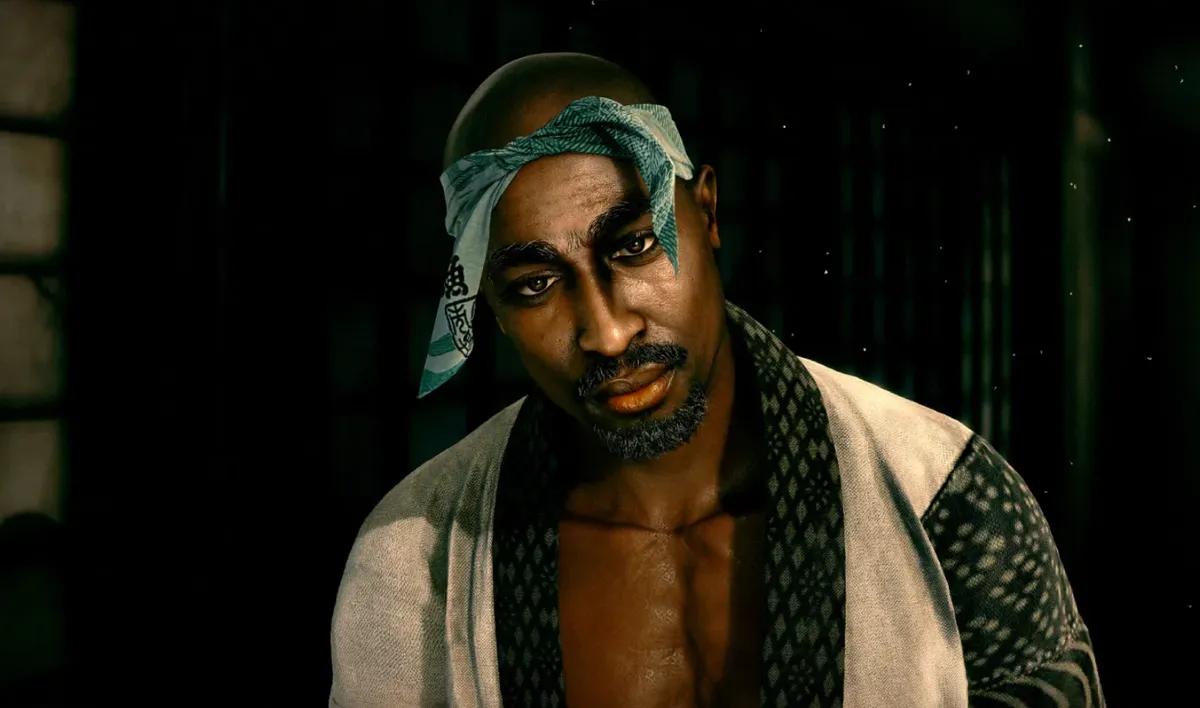
Sega has already shipped something close to the arrangement the union is describing. Tupac Shakur’s appearance in Stranger Than Heaven runs through Amaru Entertainment, the estate holding his rights, and Sega’s statement says the character was built from archival footage and photographs without the use of AI, under the estate’s ongoing supervision. He is credited as Tupac; he never speaks, and the character is called Amaru. Snoop Dogg, who is also in the game, took the Summer Game Fest stage with director Masayoshi Yokoyama and explained the decision by saying the likeness and the spirit live on. The rapper has been dead since 1996.
That case is the one the union’s logic fits best and the one its AI clause would not touch, since there is no model in it. I would rather the industry argue about Amaru than about Vader, because the first shows what estate consent, supervision and a credit cost a studio that is not trying to save a session fee.
Epic’s own calendar makes the guidelines look small. The company announced MegaJam for 12 November with $7,500 for each first-place category winner, then deleted the FAQ line that required entrants to use AI at all. One of its modifier categories pays $2,500 for the best narrative game built in Unreal Editor for Fortnite with LLM-powered NPCs, which is the Vader experiment with a prize attached to it. Tim Sweeney spent October telling developers to stop hiding their use of the tools, and named that Vader event as an early version of dynamic conversation replacing written dialogue trees.
“Developers who are getting value from AI should speak up. There’s safety in numbers.”
— Tim Sweeney
Masahiro Sakurai said this month that generative AI will push Steam past the 19,000 games it has taken this year, up from 275 in 2010, and that most of what follows will be unprofitable repeats of systems other games already use. His example was Needle in a Haystack Simulator, which hides one needle in five million pieces of hay, went viral, and drew enough copies that Studio Bitdot stamped a red original label onto its own Steam artwork so buyers could tell them apart. None of those releases pass through a Japanese union. A guideline written for 2,600 members reaches the studios that already hire them and stops there.
The draft carries no force of law, which is why the actor behind Shinji in Evangelion has asked the Japanese government to step in instead. The dignity language is doing less work than the royalty language: an estate with rights to enforce can refuse, and a living actor negotiating a session rate is in a weaker position than the family of one who died. I think that is the part of this draft that survives contact with a legal department. Stranger Than Heaven arrives on 15 January 2027 with Amaru in it and no model anywhere near the character.


 Vellykket kopiert... Takk for at du deler innholdet vårt!:


Kommentarer