




Valve ga et intervju om Steam-kontrolleren, Steam-maskinen og maskinvarekrisen










 Steam
Steam Valve
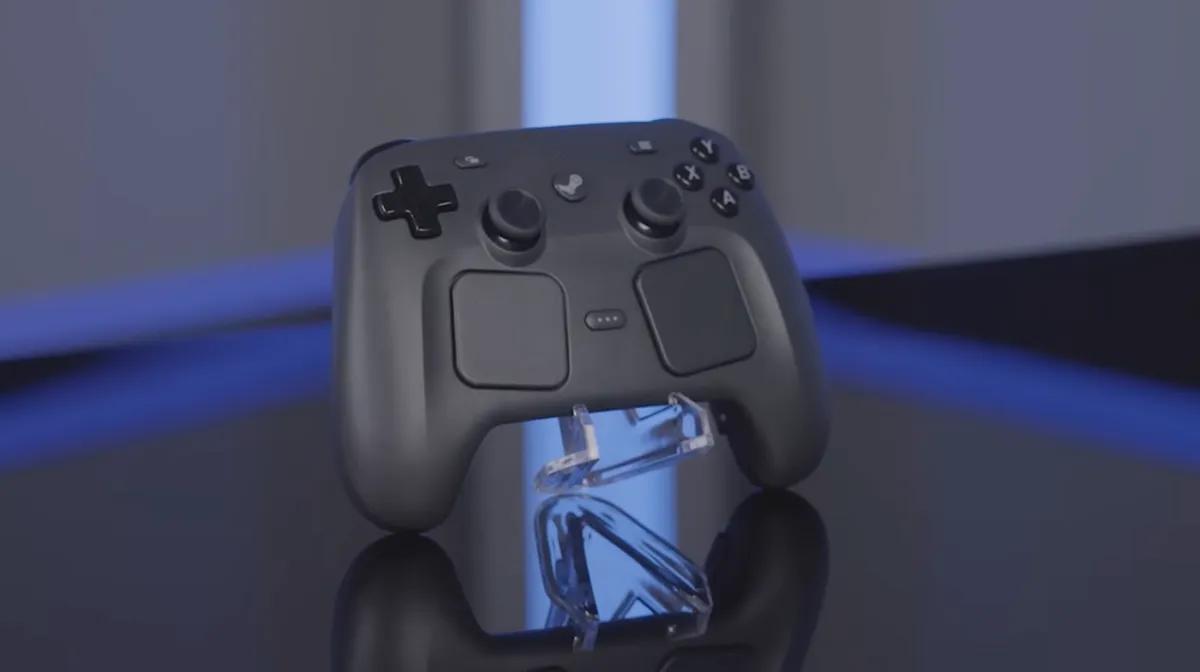
ValveValve has confirmed the Steam Controller will launch on May 4 for $99, releasing months ahead of the Steam Machine and Steam Frame after the company pulled the trio apart in response to the global RAM shortage. The Steam Machine, Steam Frame, and Steam Controller were announced together in November 2025 as a simultaneous early-2026 launch. That plan slipped, and Valve has now decided to ship the controller on its own rather than hold it back any longer. Programmer Pierre-Loup Griffais, who works on SteamOS and Valve's hardware initiatives, and mechanical engineer Steve Cardinali, who took the controller from inception through mass production, broke down the decision in an interview with IGN.
Cardinali said Valve landed on $99 by holding the line on which features made the cut. The team set input parity with the Steam Deck as a guiding constraint, so anyone moving between handheld and desk would meet the same controls in the same places. Comparable high-end PC controllers typically run $150 to $200. Cardinali described the price as the result of discipline on the bill of materials and engineering work that pulled value out of the parts that did make it in.
For the team, the controller's two trackpads and gyro sensor are not optional extras. They sit at the core of what separates the pad from a standard Xbox or PlayStation device.
"For us, we want to provide as many advanced inputs as possible so people can just play their games the way they want. In particular, both gyro and trackpads are something we find really important for these advanced feature controllers."
— Steve Cardinali
Griffais said the trackpads see most of their use inside games rather than as a desktop substitute. Players assign camera control on the right pad for first- and third-person shooters, and bind radial or virtual menus to the left pad for keyboard-heavy titles. He confirmed audiences are using the pads to play Crusader Kings and RTS games that were never designed for a controller, often through community-built configurations layered on top of the Steam input system. The groundwork goes back to the original Steam Controller and runs through the Steam Deck, with each generation feeding configurations forward.
On the wider hardware roadmap, Griffais was less specific. He confirmed Valve is still working on the Steam Machine and Steam Frame and said news on timing should come before long, but he declined to give a date. He cast the controller as a building block for the Machine, particularly for Steam Machine Verified and the out-of-box setup flow, while insisting the controller's primary audience would be ordinary desktop PC users who never plug in a Steam Machine at all. I read Griffais's repeated framing of the Machine's delay as a logistics story rather than an engineering one as the strongest signal yet that the device is effectively done on Valve's end and waiting on parts and shipping rather than on more polish.
"I think if you've used the Steam Deck docked, the experience is pretty much there. It's that plus some more GPU horsepower."
— Pierre-Loup Griffais
Griffais was direct on why the controller is shipping first. Valve was not tying launches together for marketing reasons, and doing the launches in the opposite order would have been harder because the Machine is difficult to ship without a pad. Releasing the controller alone gets it to its largest audience — desktop users — without forcing them to wait on the Machine's supply situation.
The interview also addressed why Valve has not pursued console compatibility. The Steam Controller has Bluetooth, but pairing it with an Xbox, PlayStation, or Switch will not expose its full feature set. Each console platform defines a fixed controller API, and those APIs have no way to express the controller's gyro and trackpad behavior. On any device that is not running Steam, including non-PC hardware and BIOS screens, the controller falls back to acting as a basic mouse and keyboard. Valve has put work into letting users add non-Steam apps to their Steam library so the configuration layer applies to third-party software, but the company is not chasing console certification.
Steam Deck stock came up next. Griffais acknowledged the handheld has been out of stock in many regions and pointed to two ongoing causes: shipping difficulties and memory shortages. He said Valve was aware of buyers who want a Deck and cannot get one, and the company is working on availability without committing to a date. The Deck remains available in some regions.
Asked what Valve is doing to absorb the cost pressure from RAM shortages across the Deck, the upcoming Machine, and the rest of its hardware, Griffais described a multi-source supply approach baked into the design phase. Valve avoids single-sourcing parts and works with both major and smaller manufacturers so that one supplier's problems do not stop the whole product. He compared the current memory crunch to the COVID-era microcontroller shortage, when Valve had designed in enough flexibility on small chips to keep supply moving while other companies stalled out across automotive and consumer PCs. He conceded that the memory situation is global enough that flexibility only goes so far. I think the multi-source explanation is the most concrete answer Valve has offered on why its hardware has held together through a stretch that has hit other PC makers harder.
Pressed on whether the Steam Machine delay is purely down to RAM or whether the device itself is not yet ready, Griffais declined the specifics but pointed back at logistics rather than features. The polish and feature work he described as ongoing sits on top of an experience he framed as effectively complete.
The conversation closed with two lighter notes on the trackpad and a brief confirmation on Steam Deck 2. Griffais cited his own kid playing Factorio with a Steam Deck trackpad as the most impressive use he has personally seen. Cardinali described the how-to guide he and his team are building for the Steam input configurator, including radial menus with as many as 20 inputs, layered through action sets that change function based on context. He also described his own preferred low-effort setup for casual deck builders: right pad as mouse, left pad split into mouse-click and a D-pad along the centerline.
"For us, that was one of the core goals of the new Steam Controller, is to be a traditional controller first and foremost, that has all the inputs that you need to play all the games that are designed for controller, in the places that your fingers will expect them."
— Pierre-Loup Griffais
On Steam Deck 2, Griffais confirmed Valve is hard at work on the next handheld. He drew a straight line from the original Steam Controller and Steam Machines through the current Steam Deck to the hardware shipping this year, and said the work happening now would feed directly into the next Deck.
The Steam Controller goes on sale May 4 at $99. The Steam Machine and Steam Frame remain undated.


 Vellykket kopiert... Takk for at du deler innholdet vårt!:



5% innskuddsbonus opp til 100 perler

0 % gebyrer på innskudd og uttak.





11 % innskuddsbonus + FreeSpin


10 % EKSTRA INNSKUDDSBONUS + 2 GRATISSPINN PÅ HJUL

Gratis case og 100 % velkomstbonus


5 gratis saker, daglig gratis og bonus

3 gratiskasser og en bonus på 5 % på alle kontantinnskudd.

+5 % til innskudd




Kommentarer