




Livet er merkelig: Gjenforeningsanmeldelse










 Review
 Steam
Steam PlayStation
Life is Strange: Reunion launches as the direct follow-up to Double Exposure, a game that split the fanbase over its treatment of Max Caulfield's relationship with Chloe Price and a universe-merging finale that many players rejected outright. Developer Deck Nine built Reunion on that fractured foundation, introducing the franchise's first dual-protagonist structure and walking back several of Double Exposure's most contested story decisions. The game drops the episodic format entirely, releasing as a single complete title set across a three-day window at Caledon University, where an arson crisis unfolds as Max and Chloe are reunited for the first time in years. Square Enix marketed Reunion as the ending Max and Chloe deserve, and every structural choice the game makes — what it retcons, what it honors, what it abandons — should be weighed against that claim.
Setup and What Got Retconned
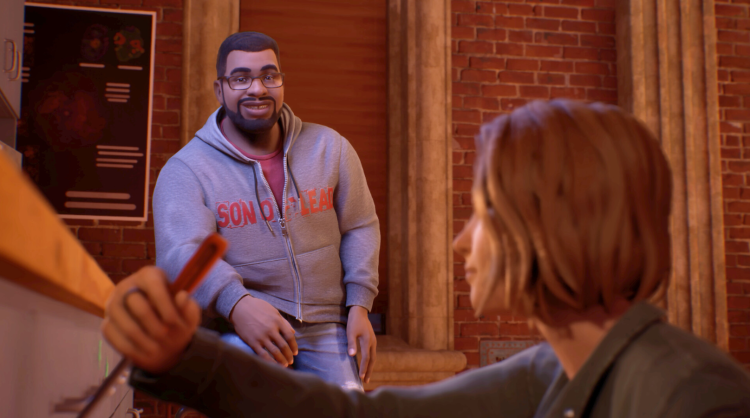
Reunion begins shortly after Double Exposure's conclusion. Max has merged two parallel realities in an attempt to save both Safi and Caledon University, and that act reshapes the world she returns to. The opening lets players establish their canon: Bay or Bae from the original Life is Strange, which romantic interest they pursued in Double Exposure, and whether they backed Safi's actions in that game. Those selections adjust tone and specific exchanges without redirecting the central plot.
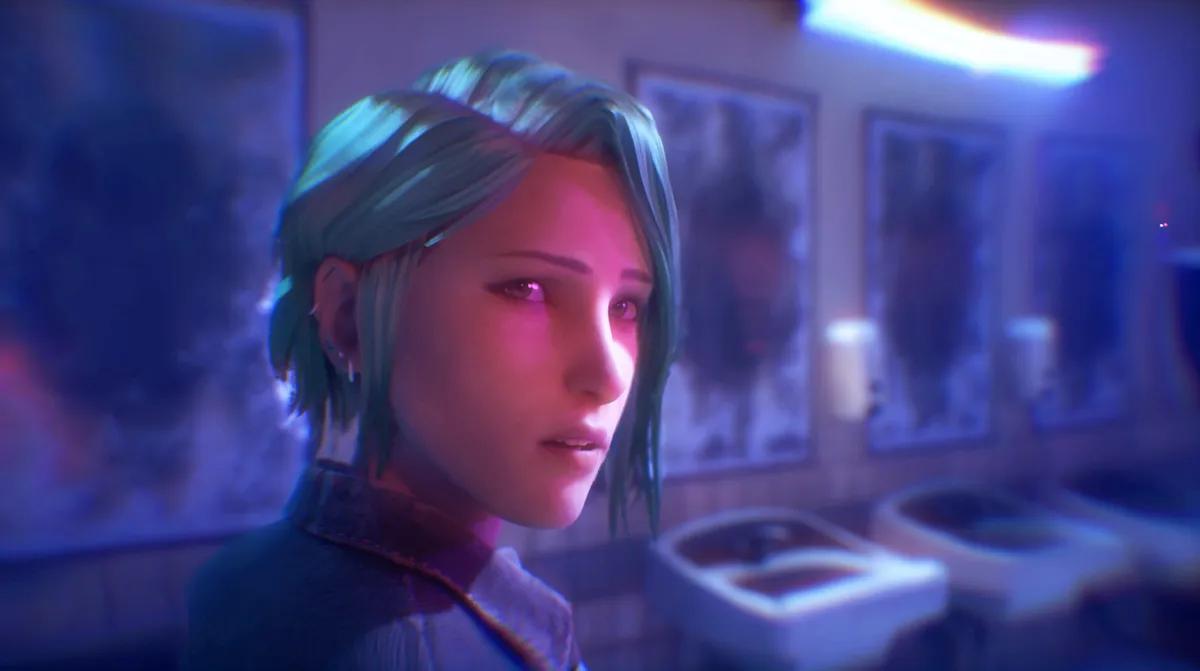
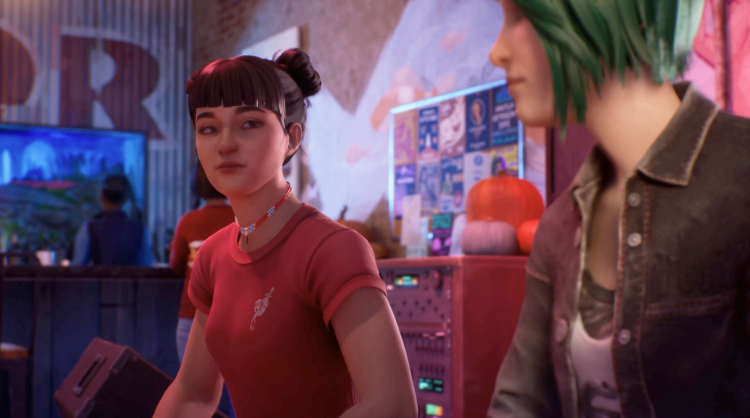
A distress text from Moses pulls Max away from a road trip and back to Caledon, where she finds the campus in flames. She uses a Polaroid photograph of herself to rewind back several days, buying a window to investigate what caused the fire. On the other side of the story, Chloe Price is managing a music band out of the Snapping Turtle Bar while suffering through nightmarish visions connecting her to Max and Safi. She drives to Caledon and pulls Max out of a failed solo infiltration of Abraxas House, a campus occult society that sits at the center of the investigation.
One of Reunion's most visible structural decisions is the retcon of Double Exposure's public-knowledge problem. By the end of that game, Max's powers had become broadly known on campus. Reunion clears that through a device called "Storm Amnesia," a side effect of the reality merge that erases most characters' memories of what they witnessed. The explanation does the job efficiently, but it also draws attention because the original Life is Strange never extended that kind of convenience to Max. Her rewind ability, which she had abandoned after Arcadia Bay, returns without receiving significant scrutiny from either the story or the people around her.
Dual Protagonists and How the Investigation Runs
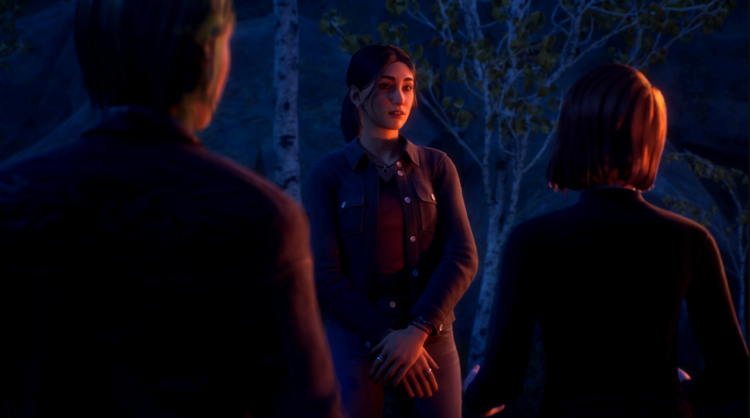
The dual-protagonist structure is Reunion's most substantial formal addition. Players alternate between Max and Chloe across a single continuous narrative, swapping control at designated points as both characters pursue their own threads through the same crisis. Max handles time-based puzzle-solving and evidence gathering; Chloe navigates social situations through confrontation, instinct, and the occasional shortcut.
Environmental interactions reflect that division consistently. An object examined as Max produces quiet, internalized commentary. The same object examined as Chloe generates something blunter and often funnier. The contrast holds across the full runtime and prevents the shared investigation from collapsing into a single voice.
Chloe's Backtalk mechanic, first introduced in Before the Storm, returns here. The system pits Chloe in verbal contest with an opponent, escalating through timed exchanges until she wins or forfeits the argument. Reunion includes three of these sequences total. For players who remember Backtalk as a defining feature of Before the Storm, three instances across a ten-hour game is a thin allocation.
The mystery itself spans several interlocking threads: the arson investigation, the Abraxas House occult society, the Caledon storm's effect on the surrounding town, and the long-unresolved history between Max and Chloe. These threads intersect in ways that reward players who cross-examine optional evidence across both character perspectives. The game tracks a hidden achievement for finding all clues, and based on publicly visible completion patterns, a significant portion of players missed key details on their first run — details that directly shaped which culprits they named in the finale.
The Reconciliation Between Max and Chloe
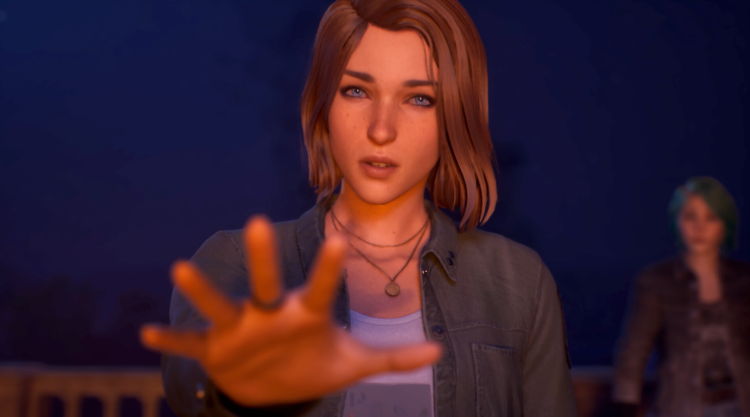
The reconciliation between Max and Chloe is the reason Reunion exists, and the game treats it with more precision than it allocates to almost anything else. Both characters arrive carrying accumulated weight: Max's guilt over Arcadia Bay, Chloe's silence across the years between Double Exposure's breakup letter and this reunion, the damage each has been repeating in the other's absence. Reunion gives that weight specific scenes to surface in rather than leaving it as subtext.
I think the decision to put player control over both sides of their major shared conversations — rather than locking perspective to Max — is the most structurally honest choice the game makes. Players can shape how guarded each character is, how quickly they move toward or away from what they actually feel, how much they are willing to admit when the other person is standing directly in front of them. The reconciliation doesn't arrive as a script delivery. Both characters have to work through the distance.
Hannah Telle and Rhianna DaVies reprise Max and Chloe respectively, and their performances carry the quieter exchanges without overstating them. The half-confessions, the avoidances, the moments of recognition that don't get verbalized — these work because both actors commit to the restraint the scenes require.
Safi receives a reduced role in Reunion but not a dismissed one. A late scene between Safi and Chloe functions independently of how invested a player was in Safi's Double Exposure arc. Moses serves as the most capable secondary character in the game — present in both leads' storylines, consistently useful to the plot, and never reduced to a device.
Player Agency and Its Limits
Life is Strange built its reputation on consequence. The original game's central choice — sacrifice Arcadia Bay or sacrifice Chloe — was not a moral puzzle with a solution. It was a demonstration that the game meant what it had been saying for five episodes: actions have costs, and those costs are permanent. Reunion uses that legacy as context without fully honoring it.
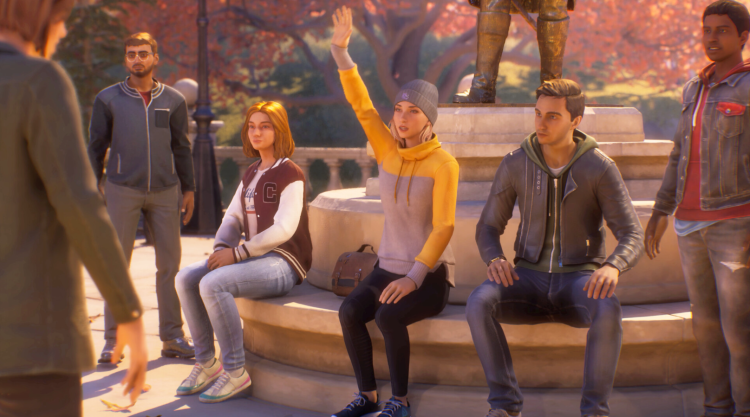
The game's choices trend toward binary clarity. Most decisions present a recognizable right path and an obvious wrong one. The investigation sequences are the exception — correctly identifying the culprits requires active evidence synthesis across both characters, and wrong calls produce different outcomes in the finale. Outside those moments, the decision-making asks relatively little.
Max's rewind power, which in the original allowed players to open a locked safe undetected or redirect a side character's fate before something happened to her, operates differently in Reunion. Its primary function is conversational: rewind a dialogue exchange until a character produces a different answer. The environmental applications that made the ability feel weighty in the original are largely absent.
Characters from Double Exposure are handled unevenly. Max's romantic interests from that game end their relationships with her off-screen, with minimal opportunity to address those endings directly. Diamond, whose abilities were explicitly teased at Double Exposure's close, does not appear. Loretta, Reggie, and Vinh show up at the finale without having accumulated narrative significance across Reunion's runtime. I find the concentration on Max and Chloe understandable — Reunion was always going to be built around them — but the series has previously shown it can develop secondary characters without hollowing out its leads, and Reunion does not attempt that balance.
Gameplay and Technical State

Reunion does not reinvent the genre's exploration loop. Players move through environments, examine objects, gather evidence, and advance the story through clearly marked triggers. Puzzles appear at intervals but are straightforward, functioning as pacing adjustments rather than genuine obstacles. Max collects Polaroid Snapshots; Chloe sketches key points of interest she encounters through her sections.
A complete run takes approximately ten hours, with a small number of optional clues and collectibles missable across both characters' paths. That runtime covers the full investigation, both characters' complete story arcs, and the ending sequence. For a non-episodic release, the pacing moves steadily without extended dead zones.
Technical problems surface throughout and are consistent. Character face rigs glitch at intervals, producing expressions that contradict the emotional register of the dialogue being delivered. Lighting fails during certain chapter transitions, occasionally requiring a full checkpoint restart or a complete relaunch to resolve. These issues mirror the production quality problems documented in Double Exposure and have not been addressed in this entry.
What Reunion Earns and Where It Concedes
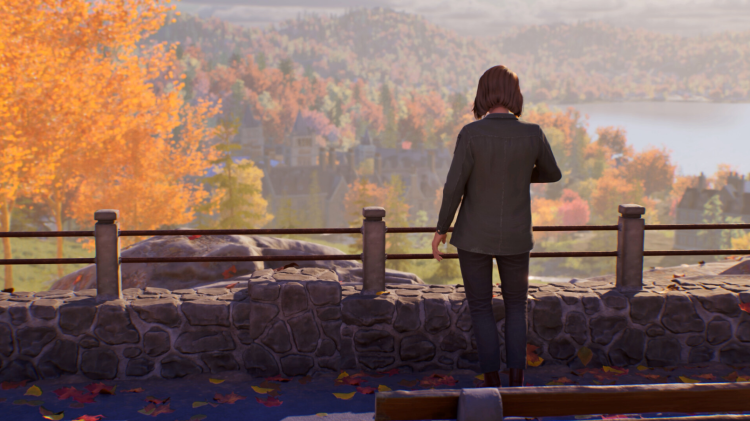
The game earns its strongest moments through patience. The scenes where Max and Chloe sit with their history — not moving urgently toward resolution but navigating the actual texture of years of guilt, silence, and unfinished conversations — are written with the specificity the franchise has always done best. The mystery investigation holds its structure through the finale. The dual-protagonist format functions as intended. The ending gives both characters a conclusion that fits who they are and what they have been through.
What Reunion concedes is also clear. The retconning of Double Exposure's most contested elements is pragmatic — that game's merged-reality setup created narrative problems that needed clearing — but the solution sidesteps complexity rather than processing it. The "Storm Amnesia" device allows Reunion to operate cleanly, but it removes the moral residue that made the original game's consequences feel permanent. Bringing Max's rewind powers back without the serious reckoning the first game established those powers always demanded is the most telling indication of what Reunion is willing to trade for its ending.
The debate over whether Reunion respects Double Exposure's cast is not easily dismissed. Those characters existed, their stories were left open, and Reunion closes most of those threads off-screen or not at all. Whether that constitutes a failure depends on how much of Double Exposure's architecture a player regarded as worth carrying forward.
Verdict
Life is Strange: Reunion is a 7/10 game. It delivers on the specific promise it made — a meaningful, emotionally honest conclusion to Max and Chloe's story — while narrowing the franchise's scope to achieve that delivery, trading player agency and secondary characters for a more controlled and concentrated ending.
Pros:
- Max and Chloe's shared scenes are written and performed with consistent emotional precision across the full runtime
- The mystery investigation rewards thorough play and connects directly to how the finale unfolds
- The dual-protagonist structure gives both characters distinct, sustained voices throughout
Cons:
- Choices outside the investigation sequences are largely binary and generate limited consequences
- Double Exposure's secondary cast and unresolved threads are retconned or sidelined without adequate resolution
Reunion recalibrates Max and Chloe back to human scale after Double Exposure's chaotic climax, and that recalibration produces the kind of specific, grounded moments the franchise runs on. Players who came to this series for the weight of consequence and the architecture of its world will leave with more reservations than those who came primarily for the relationship at its center. It knows exactly what it is trying to do, succeeds at the most important parts, and makes deliberate choices — some of them costly — to get there.


 Vellykket kopiert... Takk for at du deler innholdet vårt!:



5% innskuddsbonus opp til 100 perler

0 % gebyrer på innskudd og uttak.





11 % innskuddsbonus + FreeSpin


10 % EKSTRA INNSKUDDSBONUS + 2 GRATISSPINN PÅ HJUL

Gratis case og 100 % velkomstbonus


5 gratis saker, daglig gratis og bonus

3 gratiskasser og en bonus på 5 % på alle kontantinnskudd.

+5 % til innskudd




Kommentarer