




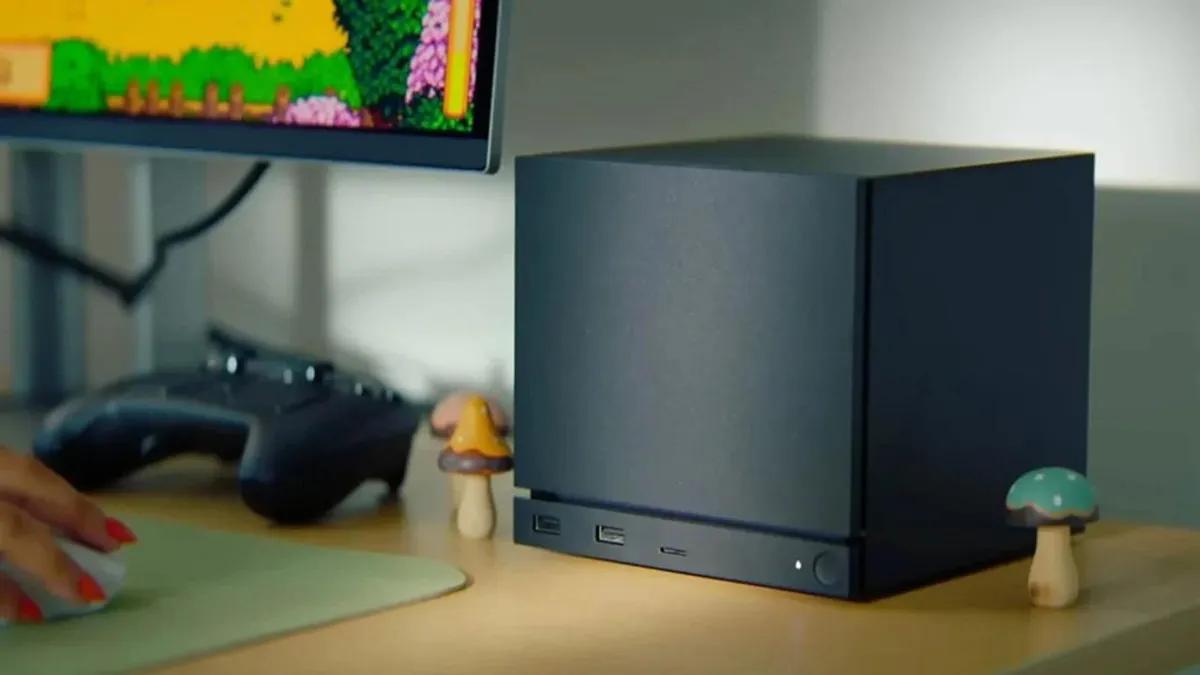
Steam Machine kan lanseres til en mye høyere pris enn forventet midt i global minnekrise










 Steam
Steam Valve
ValveThe upcoming Steam Machine from Valve is once again at the center of industry discussion after new reports suggested that its price could be significantly higher than originally expected. According to IGN, the next-generation console may face a starting price of up to $1400, largely driven by the ongoing global memory and hardware supply crisis.
The report claims that rising costs of memory components, particularly DRAM and GDDR modules used in modern gaming hardware, are putting pressure on manufacturers across the entire industry. As a result, high-performance gaming devices are becoming more expensive to produce, and that cost is increasingly being passed on to consumers.
For Valve, this presents a major challenge. The company has historically positioned itself as a flexible hardware manufacturer, offering devices like the Steam Deck at relatively competitive price points. However, the Steam Machine represents a more powerful and ambitious product, closer in scope to a full gaming PC than a traditional console.
Because of this, the estimated $1400 price tag would place it firmly in premium territory, potentially limiting its accessibility to mainstream players. Instead of competing directly with consoles at lower price points, Steam Machine could end up competing with high-end prebuilt gaming PCs.
Reports also suggest that Valve may be considering a delay in the launch of the device. The goal would be to wait for stabilization in the global memory market before finalizing production and pricing. If component costs decrease over time, the company could adjust the final retail price accordingly.
However, this strategy carries risk. Delaying a hardware launch in the fast-moving gaming industry can lead to missed opportunities, especially if competitors move first or consumer expectations shift.

Interestingly, the situation becomes more complex when considering the broader console market. If prices for next-generation versions of Sony PlayStation and Microsoft Xbox hardware also increase due to the same supply chain pressures, the Steam Machine may not seem as expensive in comparison.
In that scenario, Valve’s pricing strategy could actually benefit from a rising industry-wide cost baseline. Instead of being seen as an overpriced outlier, the Steam Machine might be positioned as a high-performance but competitive alternative in a more expensive console generation.
The situation highlights a broader issue facing the gaming hardware industry: increasing reliance on advanced memory and semiconductor components. Modern games require significantly more processing power, higher bandwidth, and faster storage solutions than previous generations, all of which contribute to rising production costs.

At the same time, global supply chains remain unstable. Demand for memory chips is being driven not only by gaming, but also by artificial intelligence, data centers, and mobile devices. This competition for limited resources is creating pricing pressure across multiple industries simultaneously.
For consumers, this could mark a turning point in how gaming hardware is priced. Over the past decade, consoles were often considered affordable entry points into high-performance gaming. However, if production costs continue to rise, that price advantage may shrink or even disappear.
Valve has not officially confirmed the $1400 pricing, and the company has also not publicly detailed the final specifications of the Steam Machine. As a result, much of the current discussion remains speculative, based on industry leaks and supply chain analysis.
Still, the possibility of a high-end price tag has already sparked debate within the gaming community. Some players argue that a premium price could be justified if the Steam Machine delivers near-PC-level performance with strong optimization through the Steam ecosystem. Others believe that anything above the typical console range could limit the device’s adoption.
Ultimately, the success of Steam Machine will depend not only on its raw performance, but also on how Valve positions it in a rapidly changing hardware market. If global prices continue to rise, what initially looks like an expensive console may instead become part of a new normal for next-generation gaming systems.
For now, the industry is watching closely as Valve navigates one of the most challenging hardware environments in recent years. Whether Steam Machine launches at $1400 or not, it is already shaping up to be one of the most closely watched gaming hardware releases of the decade.


 Vellykket kopiert... Takk for at du deler innholdet vårt!:

Kommentarer