




1348 Ex Voto-gjennomgang










 Review
 Steam
Steam Xbox
Xbox PlayStation
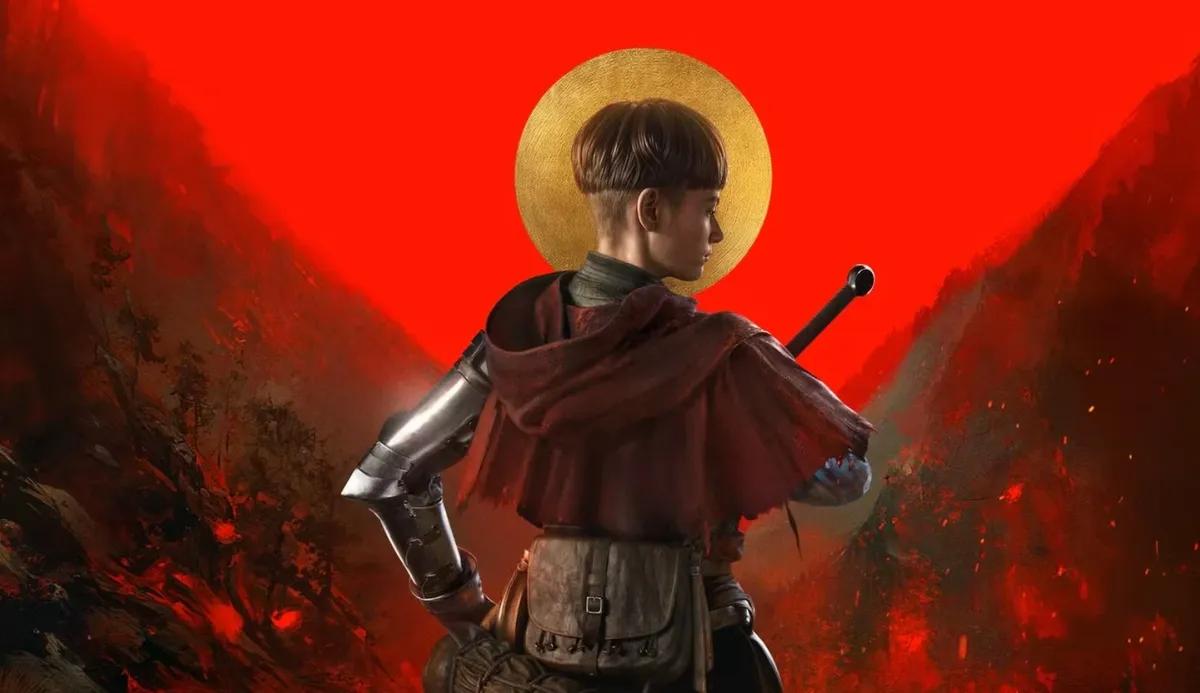
Developer Sedleo's 1348 Ex Voto releases March 12, 2026 on PC and PlayStation 5, placing players in 14th-century Italy at the height of the Black Death as knight-errant Aeta pursues bandits who have kidnapped her closest companion, Bianca. The game runs nine chapters across approximately seven to eight hours, combining third-person sword combat with linear exploration through plague-ravaged countryside, mountain passes, ancient ruins, and abandoned chapels. Voice actors Alby Baldwin and Jennifer English lead the cast as Aeta and Bianca respectively, and their performances carry significant weight in an otherwise uneven package. The result is a game that demonstrates genuine craft in specific areas while consistently stopping short of realizing the more ambitious ideas it introduces.
A Premise With Real Weight
The setup for 1348 Ex Voto is one of the more compelling in recent action-adventure releases. Bianca, a low-born postulant already given to a religious order by parents unable to support her, is kidnapped during a bandit raid that destroys her village. Aeta, a noblewoman's daughter trained as a knight-errant, makes a vow to recover her. The story locates these characters within a world where the Black Death has dismantled social order, forcing ordinary people into acts of brutality simply to survive — a setting that treats the period not as medieval backdrop but as a genuine historical catastrophe with specific human consequences.
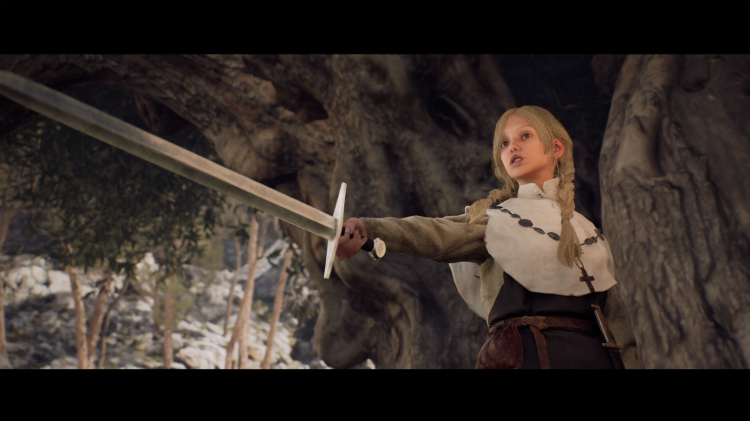
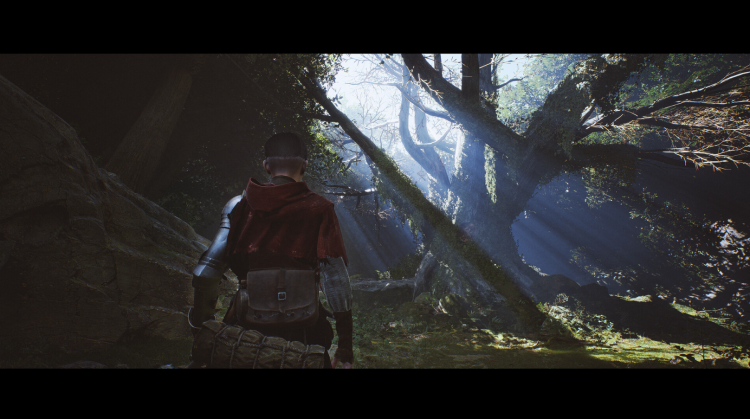
The opening sequence establishes this foundation well. Bianca and Aeta spar in a secluded forest before the raid separates them, and the contrast between their social positions — one with access to the training and armor that makes the knight fantasy possible, one without — is planted clearly. This class dynamic becomes the thematic spine that the rest of the campaign attempts to build on. When the game commits to exploring it, through abandoned churches where Aeta mourns what the plague has taken, or through encounters with people resorting to theft and violence not out of malice but desperation, the writing demonstrates genuine understanding of what makes this period worth dramatizing.
Characters and Story
Baldwin's performance as Aeta sustains the campaign through its rougher stretches. The character's iron resolve and underlying naivety read consistently across the full runtime, and Baldwin communicates both without overstating either. English delivers Bianca with comparable skill in the limited screen time the character receives. The minor roles are handled with similar investment — even characters with only a handful of lines are voiced with conviction that exceeds what the script demands of them.
The story's primary failure is structural rather than conceptual. The class dynamic between Aeta and Bianca, which the narrative presents as the engine driving its final revelations, receives insufficient development in the chapters preceding it. When the game attempts to anchor its major plot turns to that dynamic in the final act, the weight those turns need is absent. Aeta's gender — she spends much of the campaign being read as male by enemies and strangers, and does not correct them — is introduced as a thread with real dramatic potential and then dropped before it can develop. The implied romantic bond between the two women generates interest across the opening sequences and then recedes into ambiguity that reads less as intentional restraint and more as unwillingness to commit. Aeta's tendency to vocalize her observations about everything she encounters, including repeated restatements of her vow, erodes the environmental storytelling the game's level design otherwise supports. The locations carry enough detail to communicate tone and history without narration — the narration undercuts them.
Combat and Sword Mechanics
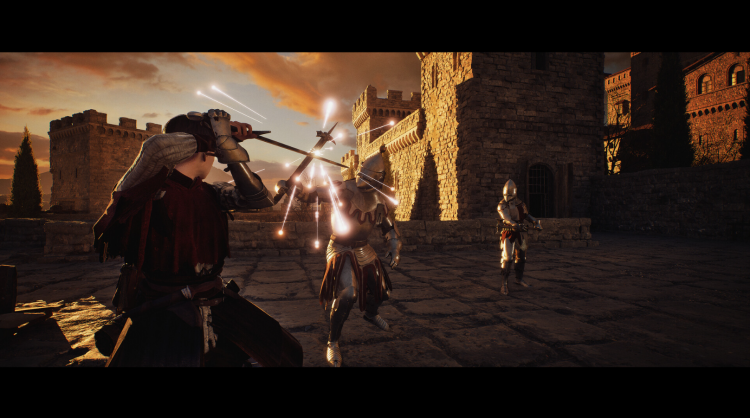
The sword combat is 1348 Ex Voto's most technically accomplished element. Aeta carries a single longsword switchable between one-handed and two-handed stances. One-handed attacks are faster with slightly reduced damage; two-handed attacks hit harder with a shorter reach. Combat encounters center on depleting enemy stagger gauges through sustained pressure until opponents become vulnerable to decisive strikes. Parrying and dodging extend the tactical options, and a Perfect Attack system rewards timing — landing the next strike immediately after a previous one connects initiates a rhythm-based combo chain that enemies cannot effectively counter. I found this system satisfying in direct one-on-one engagements, where the timing demands create genuine back-and-forth.
The weapon customization adds a secondary layer. Pommel, grip, guard, and blade components are found throughout the environment and carry passive attributes that stack toward specific combat approaches — a full two-handed loadout changes the feel of stance-switching, while lighter components suit players who prefer one-handed speed. Trinkets provide a third layer, offering effects like doubled healing, single-strike kills after breaking a stagger gauge, or automatic food use to prevent death. The equipment system has the architecture of something with meaningful build variety. In practice, by the final chapters, superior weapon components make earlier finds obsolete, and trinket combinations that trivialize standard encounters are available before the game demands any real adaptation.
The lock-on system introduces persistent friction. Its field of view is narrow and unadjustable, and it has a tendency to redirect focus mid-engagement — switching Aeta toward a secondary enemy at the moment a primary target becomes vulnerable. Enemies show no equivalent restriction, which makes multi-enemy encounters feel structurally unequal. The later chapters increase group sizes and introduce sudden enemy spawns in combat arenas, compounding the problem at precisely the point where it causes the most disruption.
Exploration and Level Structure
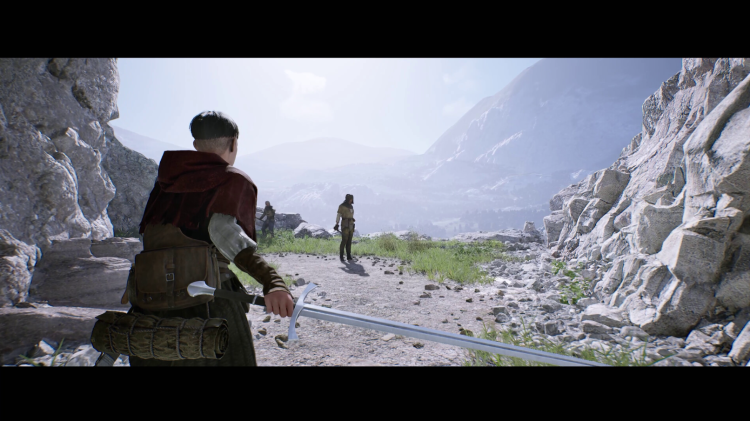
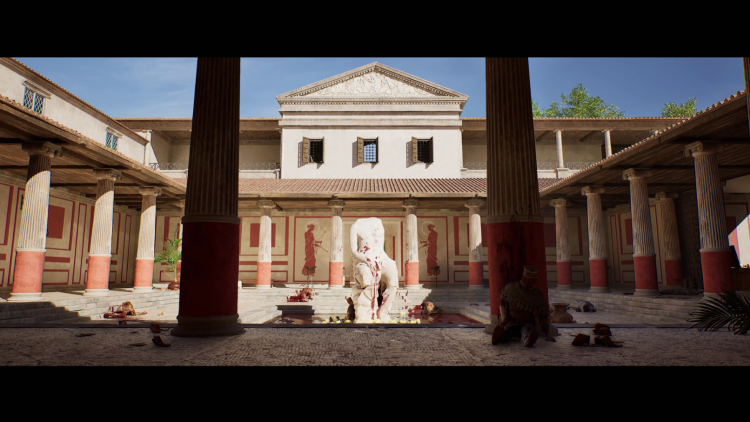
The campaign progresses through a series of linear environments: rocky mountainsides, dense forests, ruined Roman structures, and villa grounds. Each chapter assigns a distant point of interest and a single path toward it, broken by combat arenas and occasional traversal interactions — moving boxes, crouching under obstacles, climbing ledges. I encountered consistent responsiveness problems with these smaller interactions, requiring multiple attempts to trigger crouches or drops that the geometry clearly supported.
Collectible items — religious pendants and hidden trinkets — are distributed through side routes accessible from the main path. The environments lack maps, and several layouts share visual elements closely enough that tracking which branches have been searched becomes difficult. Multiple items in tested playthroughs were positioned in areas that visually indicated accessibility but required specific positioning angles to trigger a pickup prompt, producing misses that replaying sections did not reliably correct.
The puzzle design never extends past rope-cutting to lower platforms and crate repositioning to reach elevated areas. These are functional solutions to navigation problems, but they do not interact with any other system in the game and leave no impression beyond demonstrating that environmental obstacles were considered. Removing them entirely would not change the experience.
PC Performance and Technical Issues
On PC with mid-range hardware — an RTX 3060 Ti equivalent, 8-core processor, and 16GB of RAM — the game struggles to hold target frame rates at medium or high settings in areas with significant environmental density. Woodland sections and locations with layered atmospheric shadow produce drops that interrupt combat timing. Reducing to low settings recovers frame rates but degrades character model fidelity to the point where facial expressions lose the nuance the performances require. The optimization gap between what the game needs visually and what its current PC build delivers is significant for a title from a 15-person studio, but it should have been addressed before release.
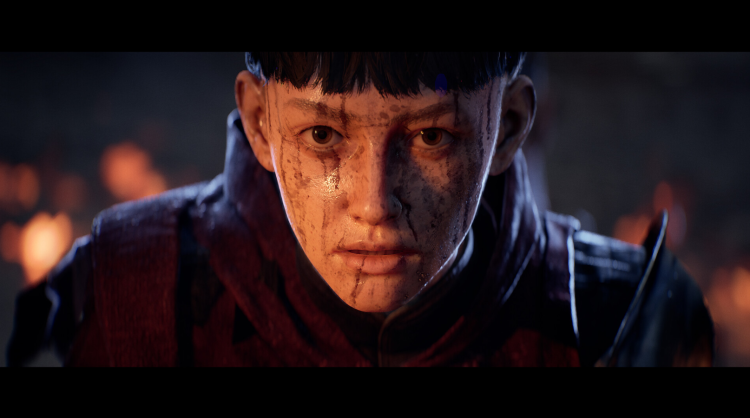
Facial animation in cutscenes produces additional problems independent of performance settings. Mouths and eyes deform unnaturally during emotional beats — a character's lips curling in a manner more comical than sinister during a scene that the script and voice acting are playing completely straight. The effect undermines sequences that the performers are executing well. Post-launch performance patches may resolve the frame rate issues; the animation problems are production-level and less likely to change.
Queer Representation and Thematic Ambition
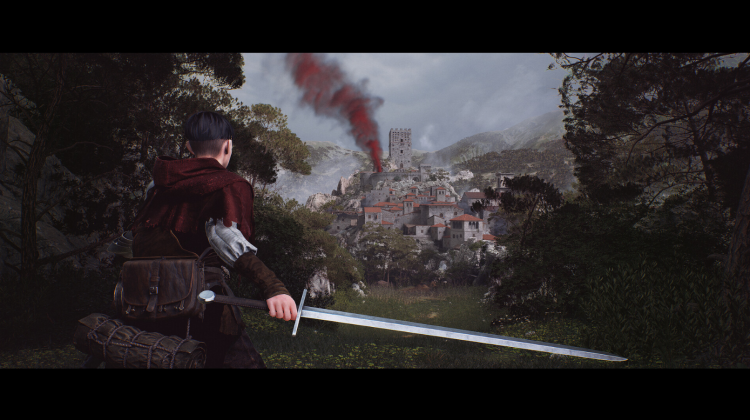
1348 Ex Voto is one of a small number of mainstream action releases to center a relationship between two women as its driving emotional premise, and that positioning earns it specific scrutiny. The game introduces the bond between Aeta and Bianca with clarity in the opening sequence. The spar in the forest, the way Aeta speaks about Bianca to strangers, and several dialogue exchanges in the first chapter establish the nature of their connection without ambiguity. The problem is that this clarity is not sustained.
The final act hinges on revelations about Bianca's circumstances and what her family's desperation forced them to do. These revelations are meant to recontextualize the campaign. For that recontextualization to function, the audience needs a detailed understanding of both women and the specific texture of their relationship. The campaign does not provide that. The short runtime — combined with chapter breaks that skip time between locations — means Aeta and Bianca share fewer scenes than the emotional architecture demands. What should land as a devastating and complex conclusion lands instead as a plot development attached to characters the game never fully built. The historical setting gave Sedleo a genuine opportunity to dramatize lives that mainstream fiction has rarely examined directly. The execution falls short of that opportunity, not through misunderstanding but through underdevelopment.
Verdict
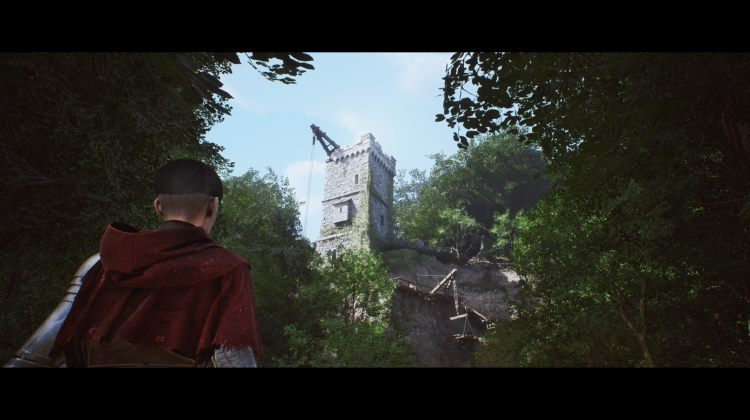
1348 Ex Voto is a 7/10 game. Sedleo built a genuinely distinctive historical setting, cast it with performers who deliver beyond what the script consistently provides, and constructed a sword combat system that rewards timing and experimentation in its best encounters — enough foundation to sustain the runtime even as the narrative, lock-on implementation, and PC optimization fall short of the game's evident ambitions.
Pros:
- Baldwin and English anchor every scene they share with performances that carry the campaign's emotional intent
- Sword combat with Perfect Attack timing and layered weapon customization is the game's most accomplished and replayable element
- 14th-century Italy rendered with visual commitment and specific historical detail that makes the setting feel genuinely inhabited
Cons:
- Lock-on system actively undermines multi-enemy combat encounters at the point where they should be most demanding
- PC performance requires significant graphical sacrifices to achieve stable frame rates, degrading the cinematic presentation the game was designed around
1348 Ex Voto sets up themes — class, survival, the moral cost of devotion — that the five-to-eight-hour runtime does not develop far enough to resolve with impact. The talent in front of and behind the camera is real, and the moments where the game's disparate elements align briefly show what a longer, more committed version of this project could have been. Sedleo has demonstrated enough craft here that a successor with more time and a sharper narrative focus would be worth watching.


 Vellykket kopiert... Takk for at du deler innholdet vårt!:



5% innskuddsbonus opp til 100 perler

0 % gebyrer på innskudd og uttak.





11 % innskuddsbonus + FreeSpin


10 % EKSTRA INNSKUDDSBONUS + 2 GRATISSPINN PÅ HJUL

Gratis case og 100 % velkomstbonus


5 gratis saker, daglig gratis og bonus

3 gratiskasser og en bonus på 5 % på alle kontantinnskudd.

+5 % til innskudd




Kommentarer